Summary
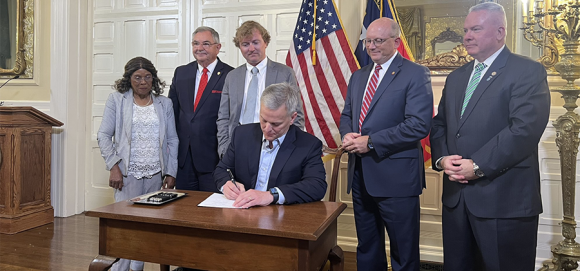
Session Law 2025-37/HB 67, Healthcare Workforce Reforms, was signed into law by Governor Josh Stein on July 1, 2025.
The new law paves the way for new licensure pathways for physicians and PAs and will waive supervision for certain PAs for the first time in North Carolina history. Most changes authorized by Session Law 2025-37 (SL 2025-37) will not be in effect until 2026. Check each section below for applicable effective dates and additional details.

Interstate Medical Licensure Compact (IMLC)
Part I of SL 2025-37 passes the Interstate Medical Licensure Compact (IMLC). By joining the IMLC, there will now be an additional pathway for licensure in NC as well as a pathway for NC licensees to obtain licenses in other compact member states. The compact license is optional and only available to candidates meeting all the eligibility requirements. The traditional application process will still be in place once the IMLC is implemented. This provision of SL 2025-37 goes into effect January 1, 2026. For general information about the IMLC as well as eligibility requirements, click here.
Visit the Board's dedicated IMLC Information Page.
Internationally-Trained Physician Employee (ITPE) License
Part II of SL 2025-37 sets up a pathway to licensure for individuals who have obtained medical education and post graduate training outside the United States. This license is only available to applicants who have been offered full-time employment at an NC licensed hospital or a medical practice in certain rural counties where an NC licensed physician is physically practicing on-site. The applicant will also need to provide information to the Board, including proof of licensure in good standing from another country within the last five years, 130 weeks of medical education from certain designated schools, two years of postgraduate training or active practice for at least 10 years, and demonstration of competency through examination. The applicant must also have no disciplinary actions or pending investigations in any jurisdiction, no criminal convictions, and be legally authorized to work in the United States.
The scope of this license is limited to practicing at NC licensed hospitals or rural medical practice where an NC licensed physician is physically present. After four years of licensure, the international physician license holder is eligible to apply for a full license.
Visit the Board's dedicated ITPE Information Page.
Physician Assistant Interstate Licensure Compact (PA Compact)
Part IV of SL 2025-37 passes the Physician Assistant Interstate Licensure Compact (PA Compact). The PA Compact will offer an additional optional pathway for eligible physician assistants to obtain the privilege to practice in NC. The traditional pathway for licensure will still be available to all physician assistants. The PA Compact is not yet operational, and the effective date of this part of SL 2025-37 is deferred for nine months. For general information about the PA Compact, click here.
Additional information specific to NC implementation of the PA Compact will be available at a later date.
Physician Assistant Team Based Practice
Part VI of SL 2025-37 establishes a team-based practice physician assistant. Team-based practice physician assistants must practice in team-based settings, which include certain health care facilities and certain physician-owned medical practices. They must have more than 4,000 hours of clinical practice experience as a licensed physician assistant and more than 1,000 hours of clinical experience within their medical specialty. Physician assistants must apply to NCMB for team-based status. Approved team-based physicians assistants are not required to file an intent to practice with NCMB, however, team-based physician assistants are still expected to collaborate and consult with other members of the health care team as necessary.
NCMB will provide more information upon the adoption of rules; this provision does not go into effect until NCMB adopts rules or June 30, 2026, whichever occurs first.
Visit the Board's dedicated Physician Assistant Team Based Practice page.
Clinical Pharmacists Practitioners
Part VII of SL 2025-37 updates the provisions of the Medical Practice Act regarding Clinical Pharmacists Providers (CPPs) allowing them to provide health care services, or medical tasks, acts, and functions delegated by a physician within a collaborative practice agreement for the purpose of providing drug therapy, disease, or population health management for patients. CPPs will be required to have a site-specific supervising physician who conducts periodic reviews and evaluations of the delegated health care services provided by the CPP. These changes went into effect October 1, 2025.